


 EN
CN
EN
CN



2026/08/04 1437view
When night falls, city streetlights turn on automatically—but today's streetlights are far more than simple timers. In cities like Bangkok, and Santiago, tens of thousands of streetlights are now connected to the cloud via LTE Cat.1 technology, becoming intelligent nodes that think, communicate, and conserve energy.

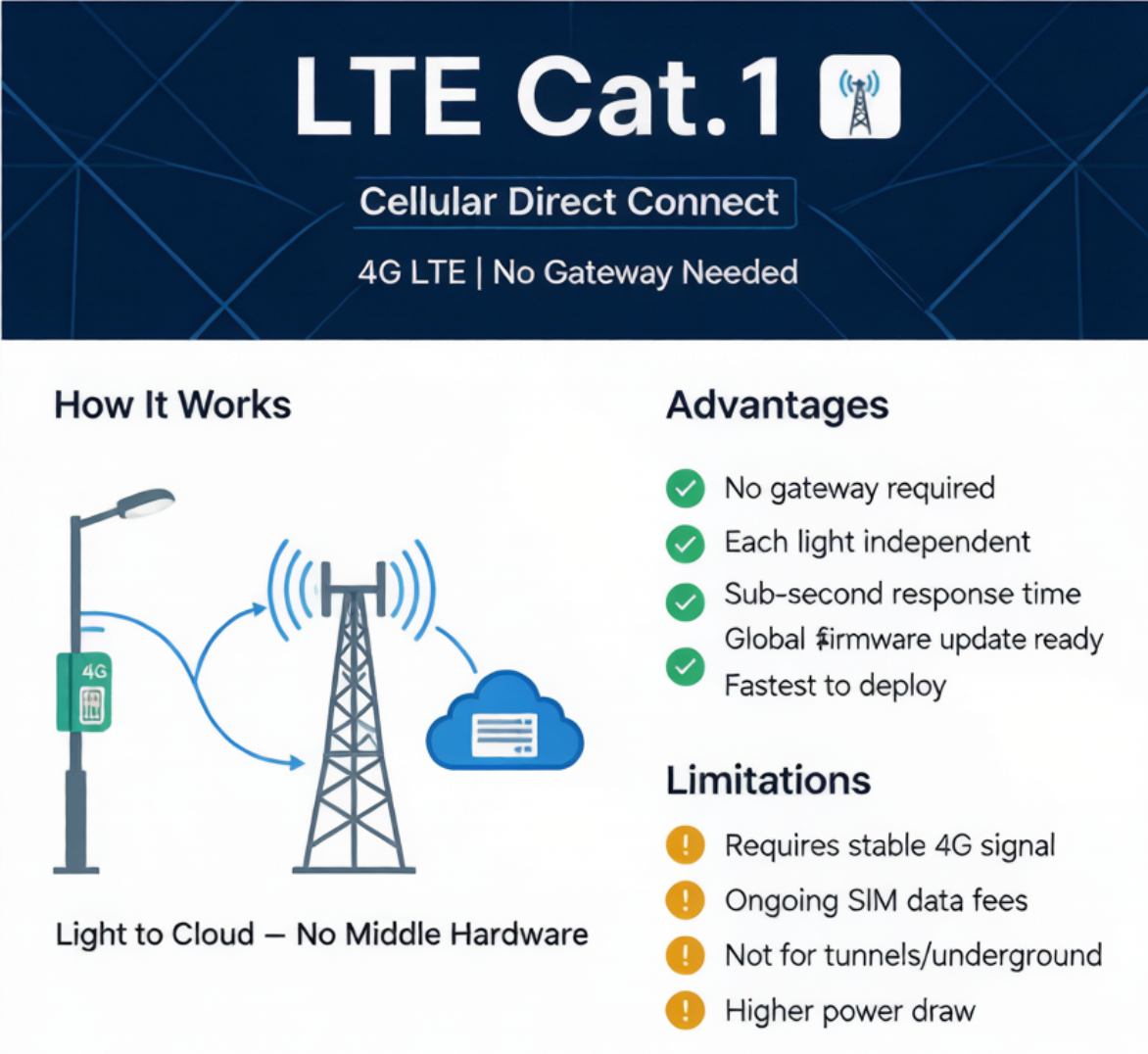
LTE Cat.1 is a terminal rate category defined by 3GPP within the LTE network. It delivers downlink speeds of 10 Mbps and uplink speeds of 5 Mbps, with latency around 50-100 milliseconds. This places it in a "sweet spot"—significantly faster than NB-IoT (enough to support rapid command responses), yet more cost-effective and power-efficient than traditional 4G Cat.4 modules.
Think of it this way: it doesn't race, but it's fast enough; it doesn't maximize power savings, but it's economical enough. That's precisely the connectivity profile smart street lighting needs.
Today's smart streetlights are no longer just lighting fixtures. They integrate environmental monitoring, video surveillance, information display, emergency call systems, and more. These functions demand a communication solution that can reliably transmit sensor data while also supporting stable command transmission.
Traditional approaches each have limitations: NB-IoT's narrow bandwidth causes congestion when thousands of lights turn on simultaneously; LoRa and Zigbee require gateways, adding complexity and potential failure points; Cat.4, while powerful, carries higher costs and power consumption that don't scale well for citywide deployment.
LTE Cat.1 connects directly to base stations without requiring concentrators or gateways—each light pole operates as an independent node. There's no limit on node scale, communication efficiency is high, and system failure rates are low. Most importantly, it leverages existing mature 4G LTE networks—no new infrastructure required. The carriers have already built the towers.
Xiamen IOTCOMM, a national high-tech enterprise with over a decade of experience in urban lighting IoT, has deployed solutions in more than 500 cities across China and over 40 countries and regions worldwide. Here are its benchmark projects illuminating the globe with LTE Cat.1 technology:
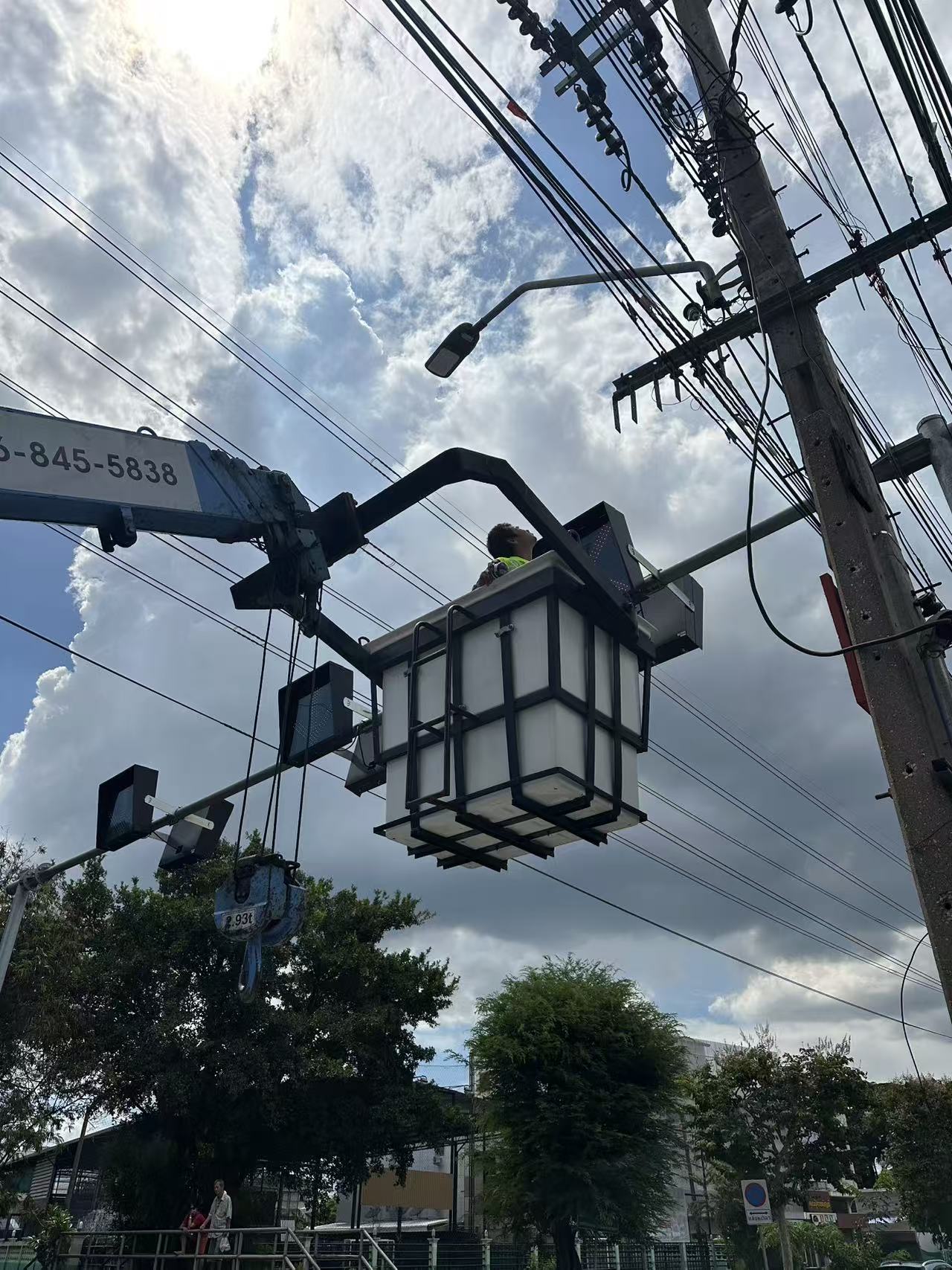
Bangkok, Thailand: Facing soaring electricity bills, inefficient maintenance, and citizen complaints, the Bangkok Metropolitan Administration partnered with IOTCOMM to deploy an LTE Cat.1-based smart lighting solution, retrofitting 30,000 streetlights. The project wasn't smooth from the start—the team initially piloted Zigbee in Ratchaburi with good results, but Bangkok's dense urban environment;with tall buildings, foliage interference, and electromagnetic noise—proved challenging. IOTCOMM's technical team responded quickly, flying to Bangkok for on-site signal surveys. They discovered the city had dense 4G micro-base station coverage and decisively switched the communication solution to LTE Cat.1. The final system delivered a stable online rate of over 99.5%, with faults triggering platform alerts and precise location within three seconds.
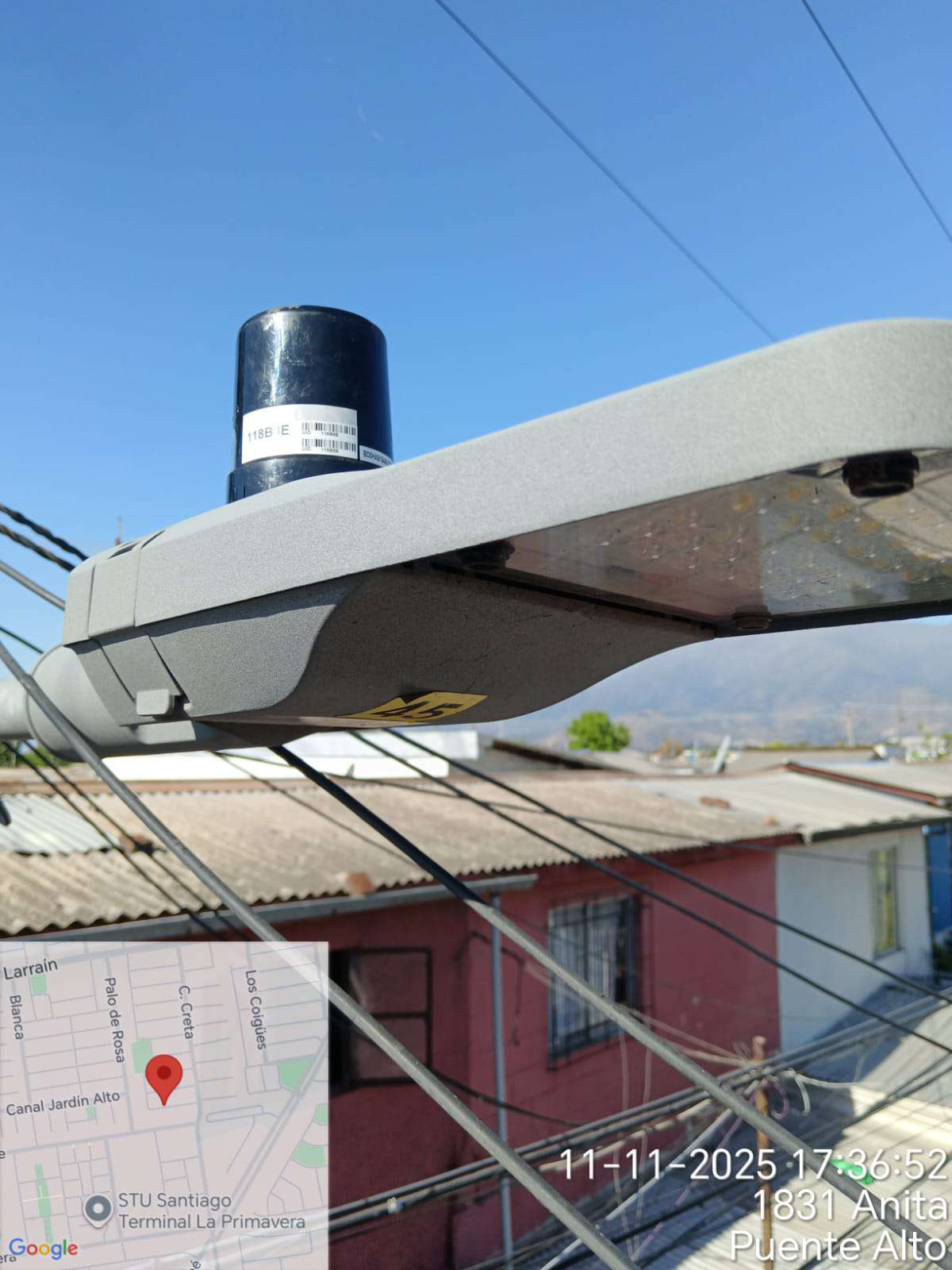
Santiago, Chile: IOTCOMM successfully retrofitted over 40,000 streetlights in South America, utilizing 4G Cat.1 and other communication solutions to achieve nearly 70% energy savings. Despite challenges including unique power supply conditions and wireless communication interference, IOTCOMM's controllers maintained stable operation. The team also customized a Spanish-language platform version, significantly lowering the operational threshold for local staff.
Globally, smart street lighting is experiencing explosive growth. By the end of 2024, global smart streetlight installations had reached 32.9 million units, with projections rising to 85 million by 2029. The technology is mature, 4G coverage is nearly ubiquitous, and module costs continue to decline. Smart street lighting is at an inflection point for large-scale deployment.
From standalone poles to intelligent grids, LTE Cat.1 is transforming city streetlights from simple lighting devices into vital nodes of urban sensory networks. It's more than a communication technology—it's a key that unlocks smarter, greener, more resilient cities.
 Consult
 Top
Top
 Pre-sales call:
 Xiamen switchboard:
 Email:oversea_sales@iotcomm.com